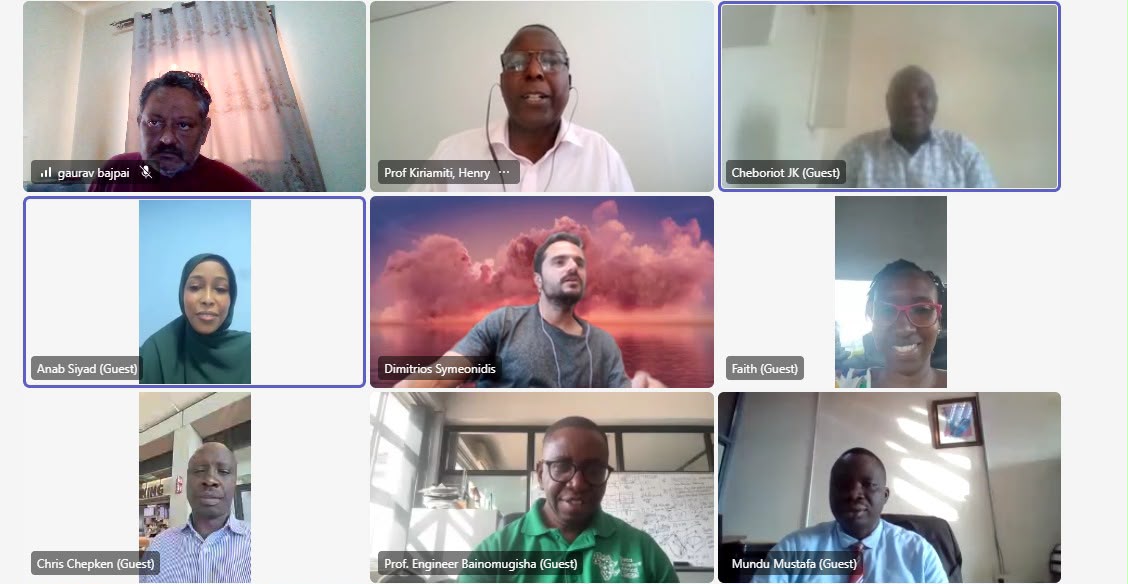
18 Jun 2026 · Online
SHAPE Project Official Launch
Consortium partners from Kenya, Uganda, Somalia, Estonia, Germany and Lithuania met to establish a shared vision and align on the implementation plan.
 Loading

 Executive Brief
Erasmus+ Capacity Building in Higher Education · Strand 2
Strengthening universities in Kenya, Somalia and Uganda to educate the professionals who will plan, build and govern sustainable, inclusive smart cities.

 Reference: ERASMUS-EDU-2025-CBHE-STRAND-2 Hosted by

This brief summarises the SHAPE programme for decision-makers, partners and funders. It is generated from the live project website, so figures, statuses and dates reflect the position on 27 October 2026.
SHAPE is a 36-month Erasmus+ capacity-building programme in which 9 European and East African universities modernise higher education for smart, sustainable and inclusive cities.
| Funding | Erasmus+ CBHE, Strand 2 (EACEA) |
|---|---|
| Period | Jan 2025 – Dec 2027 (36 months) |
| Coordinator | Moi University — Prof. Kirimi Kiriamiti |
| Partners | 9 universities in Kenya, Estonia, Germany, Somalia, Uganda, Lithuania |
| Associated partners | 3 |
| Thematic domains | 12 |
| Work packages | 5 |
| Deliverables | 20 |
The Smart City Higher Education Advancement Program in East Africa (SHAPE) is an Erasmus+ Capacity Building in Higher Education initiative designed to address the growing shortage of smart city skills across East Africa, particularly in Kenya, Somalia, and Uganda. Rapid urbanization in the region has created increasing demand for professionals capable of planning, designing, and managing smart, sustainable, and inclusive cities. However, higher education institutions currently lack specialized curricula, qualified academic staff, practical training facilities, and strong collaboration with industry and public institutions.
SHAPE responds to these challenges by modernizing higher education through innovative curricula, academic capacity building, digital learning, research collaboration, and open innovation. The project combines the technical expertise of European universities with the contextual knowledge of East African institutions to develop educational programmes that reflect the realities and priorities of African cities rather than replicating models developed elsewhere.

To strengthen higher education institutions in East Africa by developing innovative academic programmes, practical innovation ecosystems, and skilled graduates capable of designing, implementing, and sustaining smart, inclusive, and sustainable cities across Kenya, Somalia, and Uganda.
To modernize higher education through innovative curricula, digital technologies, industry collaboration, and capacity building that empower universities to produce professionals with the knowledge, skills, and leadership needed to drive sustainable smart city development in East Africa.
| Pillar | What SHAPE delivers |
|---|---|
| Curriculum | New and updated Master's-level courses, open online courses and accredited micro-credentials. |
| Academic capacity | Train-the-trainer programmes equipping staff with modern teaching methods and smart city expertise. |
| Innovation | Open Innovation Labs and three hackathons linking universities with industry and government. |
| Sustainability | An EU–East Africa Smart Cities Alliance, dissemination and a sustainability strategy. |
| # | Outcome | Description |
|---|---|---|
| 01 | New Accredited Curricula | New accredited smart city curricula and micro-credential programmes introduced across partner universities. |
| 02 | Stronger Academic Staff | Academic staff equipped with modern teaching methodologies and advanced smart city competencies. |
| 03 | Open Innovation Labs | Open Innovation Labs established within East African universities to promote innovation, entrepreneurship, and applied research. |
| 04 | Deeper Collaboration | Stronger collaboration between universities, governments, industry, and local communities in addressing urban development challenges. |
| 05 | Employable Graduates | Enhanced digital, technical, and entrepreneurial skills among students and graduates, improving employability and regional economic growth. |
| 06 | International Collaboration | Increased international collaboration through virtual exchanges, joint research, and knowledge sharing between European and East African institutions. |
| 07 | A Lasting Alliance | A sustainable EU–East Africa Smart Cities Alliance established to continue collaboration beyond the project's lifetime. |
| 08 | Long-Term Regional Impact | Long-term contribution to inclusive, resilient, and sustainable smart city development across East Africa through higher education transformation. |
Moi University coordinates the programme, with Prof. Kirimi Kiriamiti as Project Coordinator. Each work package is led by a partner institution.
| Institution | Country | Role | Leads |
|---|---|---|---|
 Moi University |  Kenya | Coordinator | WP1 |
 University of Tartu |  Estonia | Academic Partner | WP4 |
 Otto-von-Guericke-University Magdeburg |  Germany | Academic Partner | — |
 Red Sea University |  Somalia | Academic Partner | — |
 Open University of Kenya | Kenya | Academic Partner | WP2 |
 Mogadishu University | Somalia | Academic Partner | WP5 |
 Makerere University |  Uganda | Academic Partner | — |
 Kampala International University | Uganda | Academic Partner | WP3 |
 Lithuanian University of Health Sciences |  Lithuania | Academic Partner | — |
| Konza Technopolis Development Authority | Kenya | Case studies, curriculum input, regional outreach |
|---|---|---|
| Université du Burundi |  Burundi | Case studies, curriculum input, regional outreach |
| Institute of Social Policy and Research |  South Sudan | Case studies, curriculum input, regional outreach |
Five coordinated work packages carry SHAPE from research through to a lasting EU–East Africa alliance.
| WP | Title and scope | Lead | Period | Status |
|---|---|---|---|---|
| WP1 | Project Management & Coordination Activities Oversees day-to-day coordination, quality assurance, and reporting to keep SHAPE on schedule and aligned across every partner institution. 3 deliverables | Moi University | Jan 2025 – Dec 2027 M1–M36 | In Progress |
| WP2 | Establishing Design Requirements for Smart Cities in Sub-Saharan Africa Assesses regional needs and educational gaps to shape a strategic roadmap for a smart city curriculum built for East Africa's realities. 3 deliverables | Open University of Kenya | Feb 2025 – Dec 2025 M2–M12 | Completed |
| WP3 | Building a New Educational Curriculum for Smart Cities Develops and pilots new Master's-level courses, open online learning, and trainer programmes spanning smart city disciplines. 5 deliverables | Kampala International University | Oct 2025 – Sept 2027 M10–M33 | In Progress |
| WP4 | Implementation of Smart City Acceleration & Open Innovation Programme Establishes Open Innovation Labs and hackathons, and launches the EU–East Africa Smart City Alliance, turning research into practice. 5 deliverables | University of Tartu | Jan 2027 – Oct 2027 M25–M34 | Upcoming |
| WP5 | Dissemination, Exploitation, Sustainability & Communication Builds SHAPE's public presence and long-term sustainability through communication strategy, outreach, and digital channels. 4 deliverables | Mogadishu University | Jan 2025 – Dec 2027 M1–M36 | In Progress |
| Date | Milestone | Status |
|---|---|---|
| 31 Dec 2025 | WP2 deliverables due (D2.1, D2.2, D2.3) | Completed |
| 18 Jun 2026 | SHAPE Project Official Launch · Online | Held |
| 28 Sept 2026 – 2 Oct 2026 | International Partners Meeting · Mombasa, Kenya | Held |
| Jan 2027 | Train-the-Trainer Sandbox · Partner universities | Planned |
| Jan 2027 – Oct 2027 | Open Innovation Hackathons (×3) · East African partner universities | Planned |
| Sept 2027 | Pilot Courses — First Student Cohort · Partner universities | Planned |
| 30 Sept 2027 | WP3 deliverables due (D3.1, D3.2, D3.3, D3.4, D3.5) | In Progress |
| 31 Oct 2027 | WP4 deliverables due (D4.1, D4.2, D4.3, D4.4, D4.5) | Upcoming |
| 31 Dec 2027 | WP1 deliverables due (D1.1, D1.2, D1.3) | In Progress |
| 31 Dec 2027 | WP5 deliverables due (D5.1, D5.2, D5.3, D5.4) | In Progress |
| Code | Deliverable | Due | Status |
|---|---|---|---|
| D1.1 | Data management plan | Dec 2027 | In Progress |
| D1.2 | Progress Report to EU | Dec 2027 | In Progress |
| D1.3 | Quality assurance: MEAL — monitoring, evaluation, accountability and learning strategy | Dec 2027 | In Progress |
| D2.1 | Report on needs and competencies for smart cities in East Africa | Dec 2025 | Awaiting publication |
| D2.2 | Report on educational reform needs in partner universities in East Africa | Dec 2025 | Awaiting publication |
| D2.3 | Strategic roadmap for East African partner universities to develop a comprehensive smart city curriculum | Dec 2025 | Awaiting publication |
| D3.1 | Master's-level new and updated educational curriculum on smart cities and their different aspects (e.g. smart energy, smart health etc.) | Sept 2027 | In Progress |
| D3.2 | Open online courses | Sept 2027 | In Progress |
| D3.3 | Train the Trainer sandbox — first cohort of trained trainers | Sept 2027 | In Progress |
| D3.4 | First cohort of students from pilot courses — feedback and refinement | Sept 2027 | In Progress |
| D3.5 | Accreditation of developed micro-credentials and updated master's programmes | Sept 2027 | In Progress |
| D4.1 | Handbook on training of trainers for open innovation / smart city labs | Oct 2027 | Upcoming |
| D4.2 | Open innovation labs in partner universities of East Africa | Oct 2027 | Upcoming |
| D4.3 | 3 Open Innovation Hackathons | Oct 2027 | Upcoming |
| D4.4 | Initiation document for the EU–East Africa Smart City Alliance | Oct 2027 | Upcoming |
| D4.5 | Report on virtual exchanges | Oct 2027 | Upcoming |
| D5.1 | Dissemination, communication and networking strategy | Dec 2027 | In Progress |
| D5.2 | Website and social media pages development | Dec 2027 | In Progress |
| D5.3 | Sustainability strategy | Dec 2027 | In Progress |
| D5.4 | List of outreach activities | Dec 2027 | In Progress |
Consortium partners from Kenya, Uganda, Somalia, Estonia, Germany and Lithuania met to establish a shared vision and align on the implementation plan.
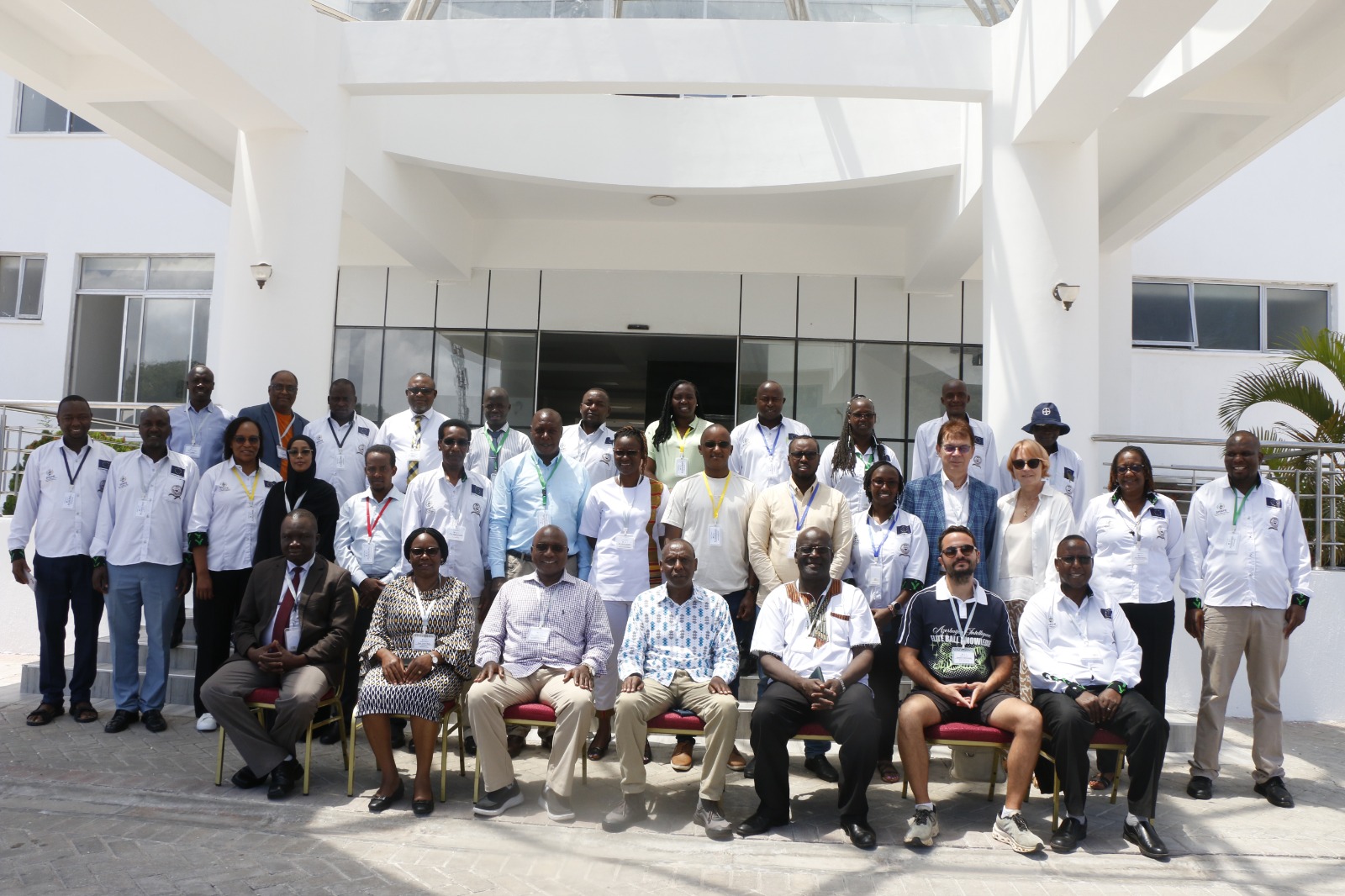
Hosted by Moi University: partners aligned on objectives, launched key work packages, visited Fort Jesus and the Mama Ngina Waterfront, and held technical workshops.
| Jan 2027 | Train-the-Trainer Sandbox | First cohort of trained trainers for the new smart city curriculum (deliverable D3.3). |
|---|---|---|
| Jan 2027 – Oct 2027 | Open Innovation Hackathons (×3) | Three hackathons run through the new Open Innovation Labs, connecting students with city, industry and government challenges (deliverable D4.3). |
| Sept 2027 | Pilot Courses — First Student Cohort | First students take the pilot smart city courses; feedback drives refinement before accreditation (deliverable D3.4). |
| Website | shapeproject.ouk.ac.ke |
|---|---|
| shape@ouk.ac.ke | |
| Telephone | +254 722 214306 |
| Coordinator | Prof. Kirimi Kiriamiti, Moi University |
| Website host | Open University of Kenya |
Funded by the European Union. Views and opinions expressed are however those of the author(s) only and do not necessarily reflect those of the European Education and Culture Executive Agency (EACEA). Neither the European Union nor EACEA can be held responsible for them.